


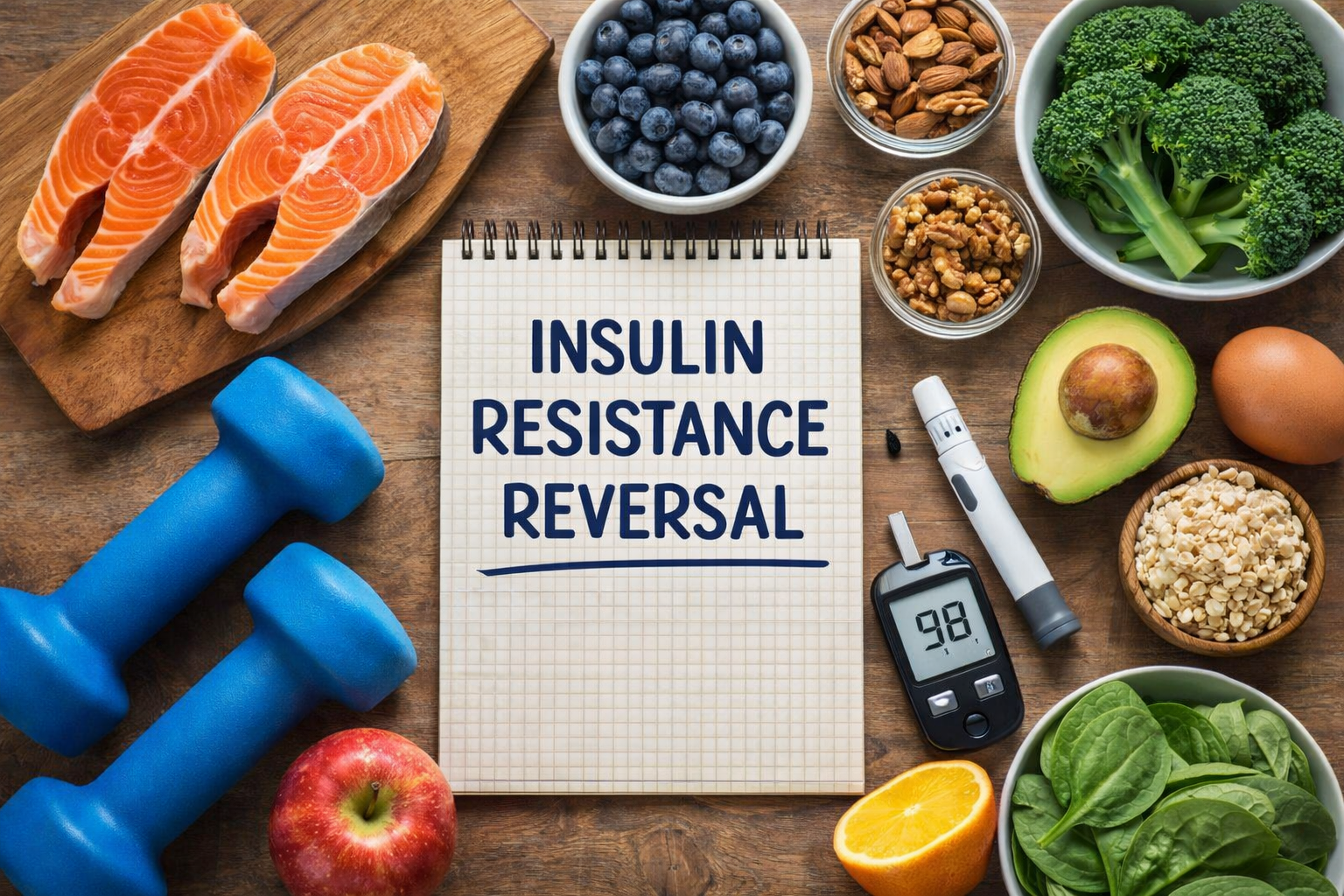
Insulin resistance is one of the biggest hidden drivers behind modern diseases like type 2 diabetes, obesity, and heart disease, yet most people don’t pay much attention to it until they see something a little off in their lab work. It happens when your cells stop responding efficiently to insulin, thus forcing your body to produce more just to keep your blood sugar stable. Over time, this leads to chronically high insulin and glucose levels, which then fuels inflammation and metabolic dysfunction throughout the body. The encouraging part is that insulin resistance reversal is not only possible, but well supported by research and doesn’t require anything extreme to get started.
What Is Insulin Resistance and Why Does It Matter?
At a basic level, insulin is the hormone responsible for helping your cells absorb glucose from the bloodstream. When cells become resistant to its signal, your pancreas compensates by pumping out more insulin to get the job done. This works for a while, but it eventually starts to put strain on the body. This then sets the stage for type 2 diabetes, weight gain, and cardiovascular issues if left unaddressed. Catching it early matters because the longer this pattern continues, the harder it can become to turn around.
What Causes Insulin Resistance to Develop?
Recent systematic reviews and meta-analyses consistently point to a handful of key contributors: excess visceral fat, physical inactivity, poor sleep, and diets where there is a lot of ultra-processed foods. None of these are solely responsible but they tend to compound with each other over time, which is part of why insulin resistance can creep up gradually rather than showing up all at once. Being aware of and understanding these drivers is the first step toward any meaningful insulin resistance reversal plan.

Can Exercise Support Insulin Resistance Reversal?
Yes, and the research here is some of the most encouraging. Meta-analyses confirm that regular resistance and aerobic exercise significantly improve insulin sensitivity, even without major weight loss. So this shows that movement itself, regardless of what the number on the scale says, is doing real metabolic work. Combining both forms of exercise tends to produce the strongest results as each one supports insulin sensitivity through a slightly different mechanism in the body.
What Else Helps Restore Insulin Sensitivity?
Diet plays just as much of an essential role, maybe even more so. Having a diet that is higher in fiber, contains whole foods, and protein, and is lower in refined carbohydrates, are repeatedly linked to better glucose control. Sleep optimization and stress reduction also show measurable benefits on insulin signaling, since both poor sleep and chronic stress can independently worsen insulin resistance. Combining movement, food choices, sleep, and stress management form the foundation of any realistic insulin resistance reversal strategy.
Insulin resistance isn’t inevitable, and for most people, it isn’t permanent either. It’s largely reversible when making consistent changes in movement, nutrition, and recovery. None of these changes need to happen overnight, so pick one area to focus on first. This is often more sustainable than trying to change everything at once. With time, these changes can restore insulin sensitivity and meaningfully improve long-term metabolic health. In fact, our team at Ironsky Fitness can help you do just this. Reach out to us to book your first class or a one-on-one session with a coach, and we’ll help you start your journey towards meaningful changes.